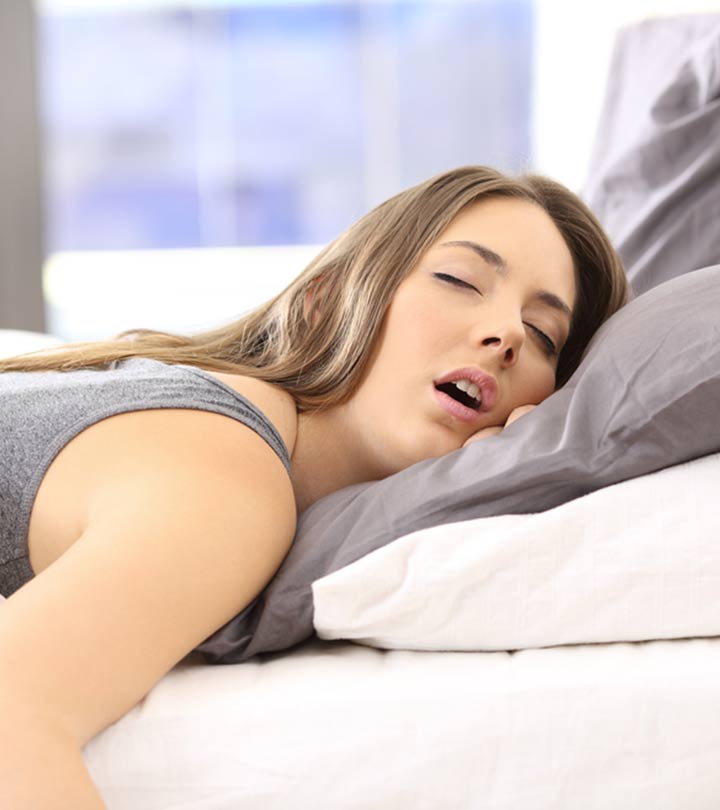
It’s late, you’re at a friend’s house after a dinner party. You’re too tired to drive home and you wonder whether you should crash at your friend’s place. But then you think, “What if I drool in my sleep? Everyone will find out.” For most people, it’s embarrassing. However, there’s finally some good news. Drooling might not be so bad after all. In fact, it could be a good thing.
It shows that you’re well-rested. And besides, it’s not like it’s very uncommon. Most people just don’t admit to it. Instead of being ashamed, you should be proud of yourself. Don’t resist showing off that you drool. It’s all for the best.
When you sleep, it comes to you in phases (1). The first three phases are commonly called non-REM stages. REM stands for ‘rapid eye movement’. One’s body typically repairs itself in non-REM sleep. REM sleep is characterised by the prevalence of dreams.

Shutterstock
There are three stages of non-REM sleep. The first is where you’ve just nodded off and lasts about ten minutes. You’re technically asleep but you can be easily aroused. The second stage is more preparatory than anything else. Your heart rate slows down and your body is getting ready to get into deep sleep. The third stage is when your body truly achieves deep sleep. You’re hard to be woken and if you do get up, you’re likely to feel a bit disoriented for a few minutes.
The next phase occurs typically an hour and a half after initially going to bed. During the REM phase, you are still in a deep sleep. Certain neurotransmitters are turned off to avoid any muscle movement. Your first REM stage is usually around ten minutes and the last one could last up to an hour. Your brain is more active, your heart rate increases from the previous phases and your breathing becomes faster too. Babies spend their sleep half the time in REM sleep as compared to adults who only spend one fifth.
Since you are completely relaxed during this stage, it’s likely that you might open your mouth a little and some saliva droops out. But not to worry, reader! As stated before, drooling is a good thing. Your body isn’t constantly producing and swallowing saliva during your sleep. Hence an open mouth (which is a relaxed mouth) is indicative of a body truly in deep sleep. All non-vital movements are halted and keeping your mouth closed isn’t vital. Apparently, evolution hasn’t considered keeping insects out of the mouth a priority (What are the chances though, really?).

Shutterstock
Not all of us get dreams every time we nod off but not all of us are well-rested either. Drooling is a sign that dreams are occurring as they should be. On the other hand, a dry mouth might mean that your sleep patterns are disturbed and you aren’t getting enough deep sleep. Or it could mean that your dream habits are not enough, and your neurons aren’t recovering as they should be.
Drooling is wholesome and is nothing to be embarrassed about. As long as it doesn’t lead to an interruption in breathing, commonly called as sleep apnea is medical circles, it’s a point in the right direction when it comes to sleep health. It’s a whole lot better than snoring and evidence of better health.
Shutterstock
Sometimes, especially in your formative years when you’re burning the candle at both ends, it’s easy to dismiss your body’s need for sleep. However, a good sleep schedule ensures that you think, work, learn, react, and get along with others better (2). A good dream also puts you in a better mood the following day.
A good night’s sleep means that your brain is repaired from the damage caused by free radicals (3). Some studies in mice have shown that it can be essential to DNA repair as well (4).
Drooling can also be caused by infection or some other physical ailment. But this lasts only as long as the ailment and can quickly be dismissed as a cause if drooling continues beyond the point of recovery. Drooling can also be indicative of some diseases in certain cases. But there are other, more pressing, disadvantages too. Let’s not pretend that anyone looks good drooling! Not to mention the fact that drool means having to replace your pillowcase every morning because it’s wet from a night of sleep.
Comments
Post a Comment